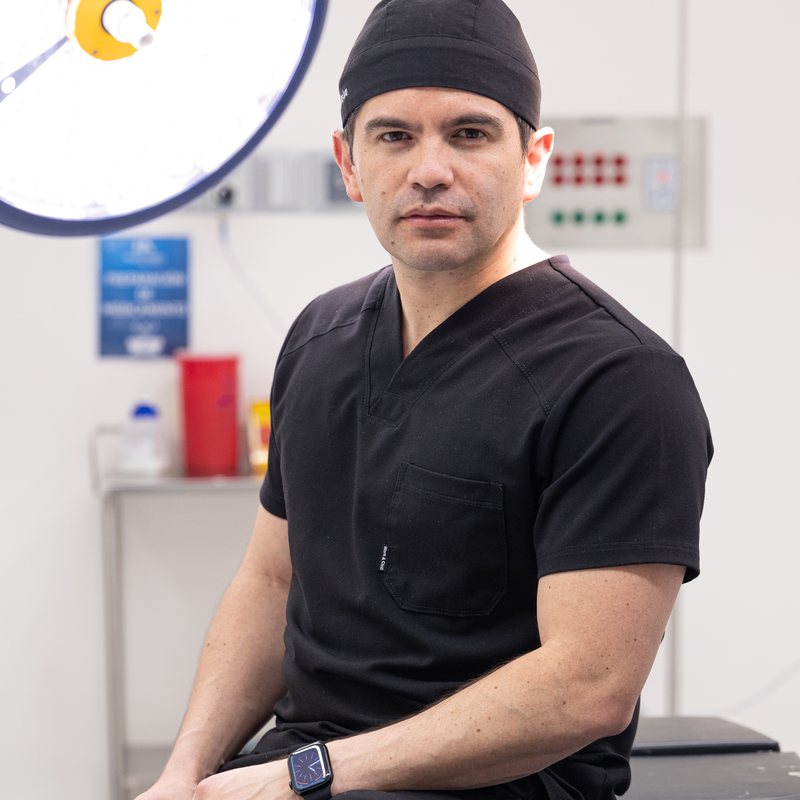
Dr. Luciano Ríos Lara
- Board certified by the Mexican Board of Plastic Surgery
- Trained at UNAM and Hospital General de México
- Teaches plastic surgery residents
Non-surgical procedures · CDMX
A calmer, more rested expression that still looks and feels completely like you.
Botox is an injection of botulinum toxin type A into specific facial muscles to temporarily relax them and soften expression lines such as forehead lines, frown lines, and crow’s feet, offered in Mexico City as a quick in-office treatment.
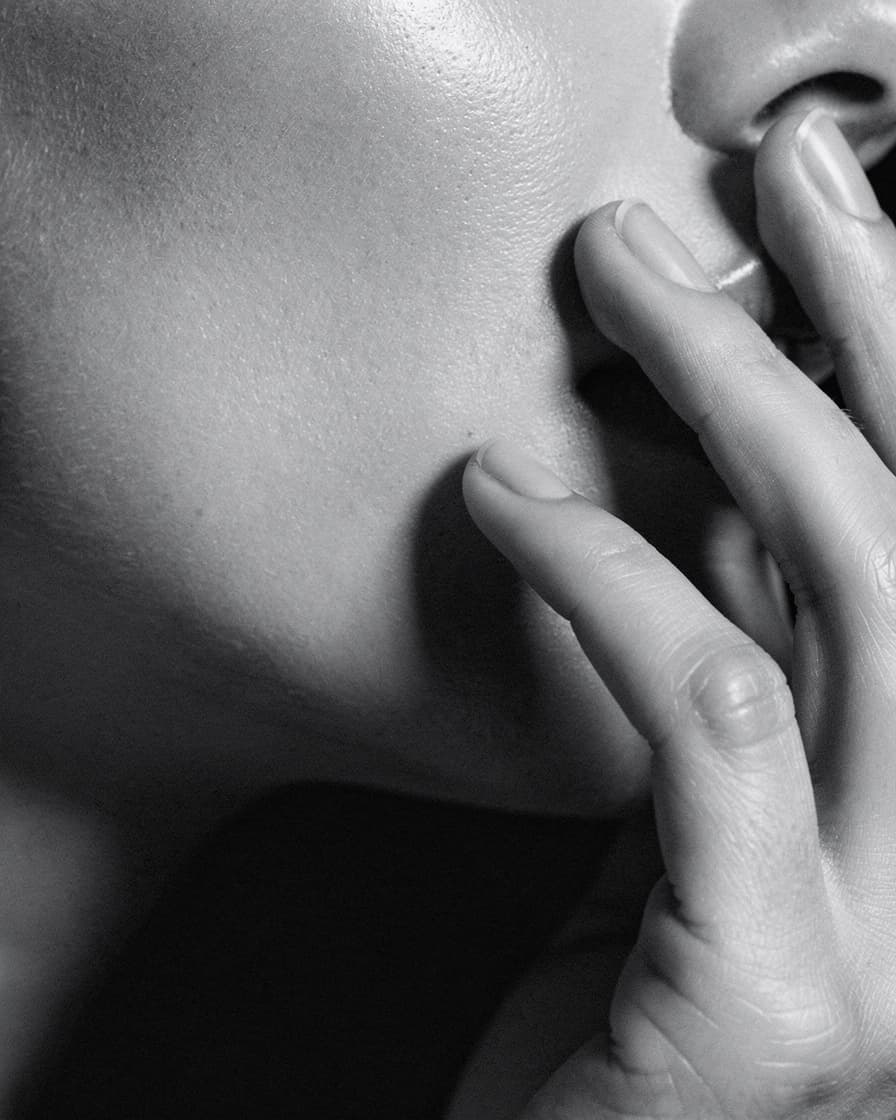
Results
Real patients of Dr. Ríos Lara, published with their consent.
“A real patient testimonial will go here, with a verified name or initials.”
Your safety
Your surgery takes place at Hospital Ángeles Clínica Londres in Roma Norte, Mexico City, under national and international safety protocols. The facility is also cardio-protected.
The doctor provides all the care you need with no additional surgeon's fees. Only extra hospital costs, if any, are covered by you.
Is it for me?
Botulinum toxin type A, widely known as Botox after its best-known brand, is a prescription medication that temporarily blocks the signal between a nerve and a muscle. Injected in small, precise doses, it relaxes the muscles that create expression lines when you frown, raise your eyebrows, or squint, so those lines soften and the face looks more rested.
Long before it became a cosmetic treatment, botulinum toxin was used in medicine to treat conditions such as excessive blinking (blepharospasm), facial spasms, and involuntary muscle contractions. That long clinical track record is why it is considered a well-understood treatment when it is administered by a trained physician using the right dose and technique.
It works best in the upper third of the face: the vertical “11” lines between the brows, horizontal forehead lines, and crow’s feet. Other areas, such as the neck, chin, or around the mouth, are less common and call for more experience. Several brands are available, including Botox, Dysport, and Xeomin. All are type A toxins, but their units are not interchangeable.
Results are not instant. Most people start to see a difference in three to four days, with the full effect at around two weeks. It typically lasts four to six months, and if you don’t repeat the treatment, muscle movement gradually returns to how it was before. A conservative dose is generally preferable to an aggressive one, because overtreatment can flatten your expressions.
Botox is a good fit for adults bothered by dynamic wrinkles, the lines that show up or deepen when you make facial expressions, who want a fresher look without surgery. It can also soften lines that are starting to stay visible at rest, although deep, static wrinkles often need to be combined with other treatments such as hyaluronic acid fillers or laser resurfacing.
It does not tighten loose skin or remove excess skin, and it is not a substitute for a facelift or brow lift when tissues need to be repositioned. If you are traveling to Mexico City, it is an easy treatment to schedule around a short stay, since there is no downtime. At your consultation, your surgeon will review your medical history, study which muscles drive your lines, and talk through your goals before deciding on areas and dosing.
Botox gives the most predictable results in the upper face: the frown lines between the brows (the “11s”), horizontal forehead lines, and crow’s feet, the lines that fan out from the corners of the eyes when you smile. Carefully placed doses can also give the tail of the brow a subtle lift.
Other facial uses are done more selectively and require experience: fine lines on the upper lip or a lip flip, downturned mouth corners, a dimpled or “orange peel” chin, vertical neck bands, and the masseter muscles, which are treated for teeth grinding or to slim the jawline. In these areas, dosing and technique make a big difference, so they are worth discussing in detail at your consultation.
Most side effects are mild and short-lived: small injection marks or bruises, some redness, and in some people a slight headache during the first week. To minimize them, avoid rubbing the area, skip intense exercise, and stay upright for the first few hours after treatment.
Less often, patients may notice asymmetry, heaviness in the forehead, or a mild droop of the eyelid or brow (ptosis). Ptosis is uncommon, happens when the product affects a neighboring muscle, and resolves on its own as the effect wears off, usually within a few weeks. Because the toxin is temporary, its side effects are too. Even so, it matters that it is administered by a physician who knows facial anatomy well, and that you disclose any neuromuscular condition or medication you take.
Botox and Dysport are two brands of botulinum toxin type A, as is Xeomin. All three work the same way, temporarily relaxing the muscle, and are used for the same cosmetic indications. The differences lie in their formulation: each manufacturer produces the molecule with different accompanying proteins and processes, so their units are not interchangeable. A Dysport dose is expressed in more units than a Botox dose for a comparable effect, which does not make it stronger or weaker.
In practice, both deliver similar results and longevity when properly administered. Some reports suggest Dysport may spread slightly more in the tissue or kick in a few days sooner, which can be useful across broad areas like the forehead and calls for more precision in small ones. The choice depends on the area being treated, how you have responded to previous treatments, and your physician’s judgment. What matters most is that the product is properly approved and dosed correctly.
Recovery
You may see tiny injection marks that fade within hours, and occasionally a small bruise. Most people go straight back to their usual activities.
The effect begins to show and lines soften when you make expressions. Some people notice a mild headache during the first week.
The full effect is usually visible. This is when your follow-up visit checks symmetry and results.
The effect gradually wears off and movement returns. If you want to maintain your results, you can schedule another treatment.
Baby Botox uses smaller, more widely spread doses of botulinum toxin than a standard treatment to soften expression lines while keeping natural facial movement, or to help prevent lines from setting in. Available in Mexico City.
A lip flip uses a few units of botulinum toxin in the muscle around the mouth so the upper lip rolls slightly outward and looks fuller and more defined, without adding volume. Offered in Mexico City as a quick in-office treatment.
Botox for bruxism is an injection of botulinum toxin into the masseter muscles, which close the jaw, to reduce the force of teeth clenching and grinding and ease related discomfort. Offered in Mexico City as a quick in-office treatment.
Common questions
Most people start to see a difference in three to four days, with the full effect at around two weeks. It typically lasts four to six months. If you don’t repeat the treatment, muscle movement gradually returns.
The injections use a very fine needle placed at precise points, and the session usually takes 10 to 15 minutes. A topical numbing cream or gel can be applied first if you prefer, although many patients don’t need it.
Most people go straight back to their usual activities. You may see tiny injection marks that fade within hours, and occasionally a small bruise. For the first few hours, avoid rubbing the area, lying down, or strenuous exercise.
Most are mild and short-lived, such as bruising, redness, or a slight headache. Less often, there may be asymmetry or a mild, temporary droop of the eyelid or brow that resolves on its own.
Both are brands of botulinum toxin type A and work the same way, but their units are not interchangeable. When properly administered they deliver similar results; the choice depends on the area and your physician’s judgment.
It is not recommended for people with myasthenia gravis or other neuromuscular disorders, or during pregnancy or breastfeeding. It is also not done if there is an active infection or inflammation in the area. Your medical history and medications are reviewed at your consultation.
It depends on your recovery and your follow-up visits. There is no downtime, and the result is usually reviewed at around two weeks. Your surgeon will help you plan your stay at your consultation.
Pricing depends on your case and is confirmed at your consultation. It is based on the areas treated and the dose you need, which your surgeon sets after studying how your face moves.
Price
Price range to be confirmed
Your final price depends on your case. You'll get it in writing at your consultation, with everything it includes.
Get my quotePhone: 55 6232 9139
Getting here
Google Maps (opens in a new tab)Waze (opens in a new tab)Apple Maps (opens in a new tab)View location
Your next step