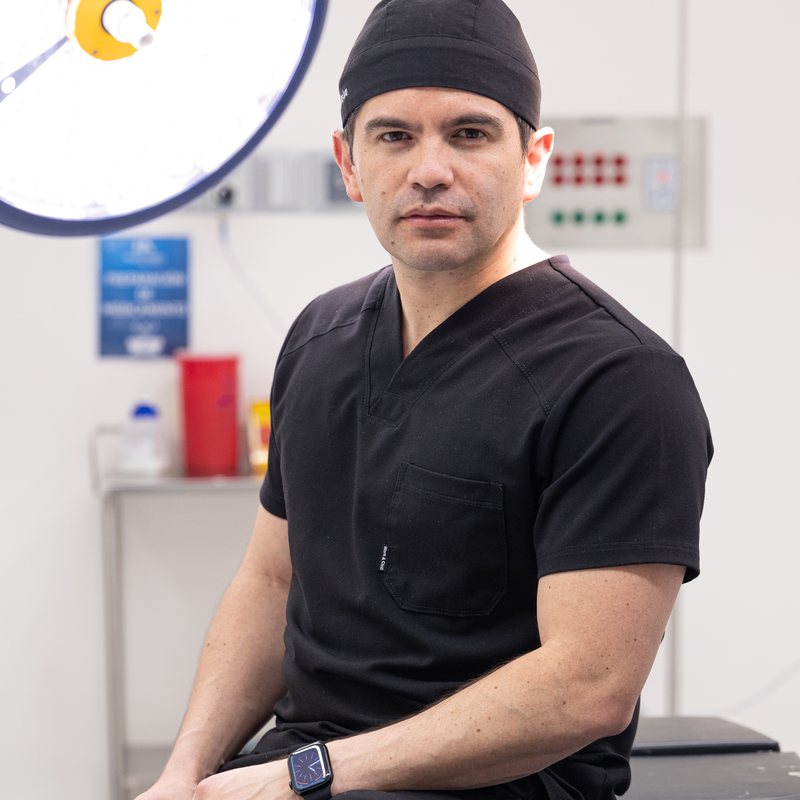
Dr. Luciano Ríos Lara
- Board certified by the Mexican Board of Plastic Surgery
- Trained at UNAM and Hospital General de México
- Teaches plastic surgery residents
Procedures · CDMX
A body that finally reflects your hard work, with a lighter, firmer shape.
Post-bariatric surgery is a set of procedures that remove excess skin and reshape the body after major weight loss, whether from bariatric surgery or from diet and exercise, performed in Mexico City.
Results
Real patients of Dr. Ríos Lara, published with their consent.
“A real patient testimonial will go here, with a verified name or initials.”
Your safety
Your surgery takes place at Hospital Ángeles Clínica Londres in Roma Norte, Mexico City, under national and international safety protocols. The facility is also cardio-protected.
The doctor provides all the care you need with no additional surgeon's fees. Only extra hospital costs, if any, are covered by you.
Is it for me?
After major weight loss, the skin often can’t shrink back to fit your new body. The result is folds of loose skin on the abdomen, back, arms, thighs, buttocks, chest and sometimes the face and neck. Beyond appearance, these folds can cause rashes, chafing and skin infections, and make hygiene, exercise and finding clothes that fit harder.
Post-bariatric surgery is not a single operation but a plan tailored to each patient. A lower body lift works circumferentially around the abdomen, lower back, buttocks and thighs. An upper body lift targets the chest or breasts, arms and upper back, removing sagging skin and restoring structure to the contour. Some patients also have laxity in the face and neck, which can be improved with surgical or non-surgical procedures.
Because these are extensive surgeries, they are often planned in stages, with recovery time between them. Scars are long, although they are placed where clothing can cover them whenever possible. The goal is a meaningful change in both body contour and quality of life.
The order of stages depends on which areas bother you most and on your overall health. It is common to start with the abdomen and lower body and address the arms, chest or thighs in a second stage, but every plan is individual. Because these operations are long and recovery takes weeks, patients traveling to Mexico City should plan for an extended stay and for follow-up between stages.
These procedures are for people who have lost a large amount of weight, through bariatric surgery (gastric sleeve, bypass) or other means, whose weight is now stable, and who have excess skin that causes physical problems or bothers them cosmetically.
If you had bariatric surgery, it is important to coordinate your evaluation with your follow-up team (bariatric surgeon and dietitian) to confirm your nutrition supports good healing.
Recovery
Pain that is manageable with medication, swelling, bruising and, in many cases, drains are common. Getting up and walking early, with help, is an important part of recovery.
You will wear compression garments and avoid strenuous activity. When you can go back to work depends on the extent of surgery and the kind of work you do.
Swelling gradually goes down and the contour becomes more defined. Scars mature over several months or longer.
Common questions
Your weight should be stable for several months, typically at least six months to a year. It is also important to coordinate with your bariatric follow-up team to confirm your nutrition supports good healing.
A lower body lift works circumferentially around the abdomen, lower back, buttocks and thighs. An upper body lift targets the chest or breasts, arms and upper back. Every plan is tailored to the patient.
Because these are extensive surgeries, they are often planned in stages, with recovery time between them. It is common to start with the abdomen and lower body, but the order depends on which areas bother you most and on your overall health.
Pain that is manageable with medication, swelling, bruising and, in many cases, drains are common in the first few days. Getting up and walking early, with help, is an important part of recovery.
In the first weeks you will wear compression garments and avoid strenuous activity; when you can go back to work depends on the extent of surgery and the kind of work you do. Swelling gradually goes down over the following months as the contour becomes more defined.
Risks include seroma, wound-healing problems that are more common in smokers or with nutritional deficiencies, and long, wide or raised scars. Bleeding, infection, blood clots in the legs and residual loose skin that may need a touch-up are also possible.
Pricing depends on your case and is confirmed at your consultation. That visit reviews your weight-loss history and problem areas to decide which procedures to do and in what order.
It depends on how your recovery goes, on the extent of your surgery and on your follow-up visits with your surgeon. Your length of stay and follow-up between stages are planned at your consultation.
Price
Price range to be confirmed
Your final price depends on your case. You'll get it in writing at your consultation, with everything it includes.
Get my quotePhone: 55 6232 9139
Getting here
Google Maps (opens in a new tab)Waze (opens in a new tab)Apple Maps (opens in a new tab)View location
Your next step